


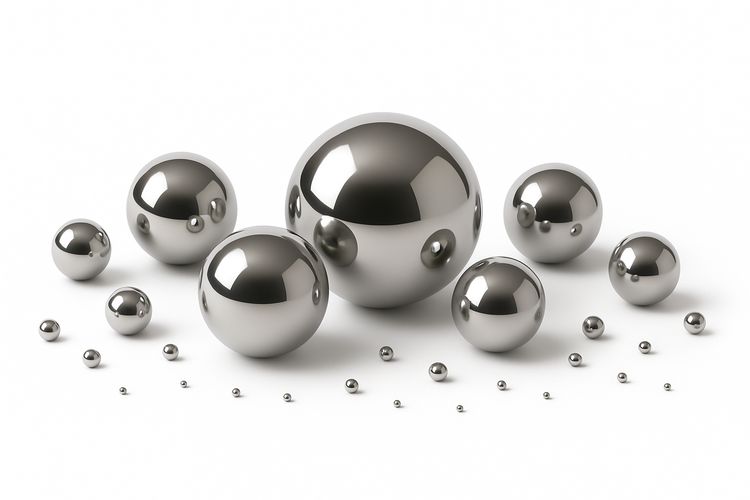
Alloy 95W Tungsten Balls – High Density in a Small Size
Alloy 95W tungsten balls add high mass where space is tight. They contain about 95% tungsten by weight. As a result, they offer more than twice the density of steel. In addition, the metal binder helps the alloy handle stress.
Key Facts About Tungsten Heavy Alloy
The exact grade affects how the balls perform. Therefore, use the following facts as a guide:
- Tungsten content: About 95% by weight.
- Binder: Nickel with iron or copper, depending on the grade.
- Structure: A metal binder holds the tungsten grains together.
- Density: Typically about 18.0 g/cm³.
- Hardness: Maximum 34 HRC for ASTM B777 Class 3 material in the unworked condition (as-sintered or annealed).
- Strength: Depends on the alloy composition and material condition.
- Magnetic response: Nickel-iron grades often respond to magnets. In contrast, nickel-copper grades usually have a very low magnetic response.
- Heat and electric flow: Values depend on the binder and tungsten content.
- Corrosion: The fluid and working temperature affect the alloy’s resistance to attack.
For example, ASTM B777 Class 3 includes alloys with a nominal tungsten content of 95%. However, tungsten content alone does not prove compliance. Therefore, ask us to confirm the material data for your order.
Hardness of 95W Tungsten Balls
ASTM B777 Table 1 sets a maximum hardness of 34 HRC for unworked Class 3 material. This covers the as-sintered or annealed condition. Therefore, 34 HRC is an upper limit, not a fixed hardness value.
In addition, ASTM B777 assesses material lots using test coupons. Agree on any hardness tests required on the finished balls before ordering.
Benefits of 95W Tungsten Balls
High density adds weight without taking up much space. As a result, the alloy suits compact balance weights and counterweights. In addition, low magnetic grades can help limit unwanted magnetic effects. However, the right grade must match your design and working conditions.
Common Uses for Alloy 95W Tungsten Balls
Designers choose the alloy when they need high mass in a small part. For example, common uses include:
- Valves and pumps: Designers use heavy alloy balls in some check valve designs.
- Aerospace and defense: The alloy adds mass to balance weights and control parts.
- Precision tools: In addition, the balls serve as counterweights and mass elements in measuring devices.
- Counter-UAS: Manufacturers use tungsten alloy shot in specialized anti-drone systems.
- Radiation shielding: Heavy alloys help reduce X-rays and gamma rays passing through compact shields.
Available Grades and Sizes
We supply standard inch and metric sizes. In addition, we can review requests for custom sizes and surface finishes.
See our precision grade guide for ISO 3290, DIN 5401 and AFBMA references. Then, agree on the required tolerances and checks before ordering.
Finally, send us the ball size, quantity and drawing. We can then check your needs and prepare a quote.