


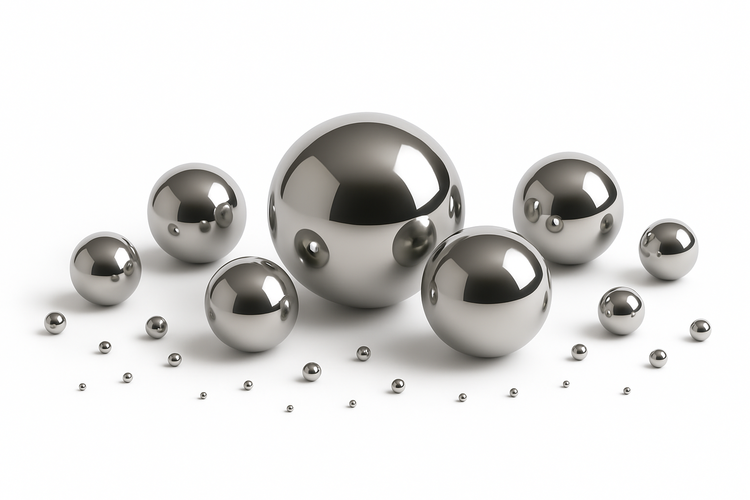
Cobalt Alloy Balls for Valves, Pumps and Wear Resistance
REDHILL supplies cobalt alloy balls for valves, pumps and precision parts. These alloys resist wear and corrosion, but each grade offers a different balance of hardness and toughness. Therefore, match the alloy to the fluid, heat, load and type of wear in your system.
Cobalt Alloy #20 Balls
Alloy #20 contains cobalt, chromium and tungsten. Its hard carbides help resist wear from sand and other solid particles. As a result, this grade suits duties that combine abrasion with chemical attack. However, it has low resistance to shock loads.
Key Material Properties
- Nominal composition: Cobalt base, 32.5% chromium, 17.5% tungsten and 2.5% carbon by weight
- Reference hardness: 53–62 HRC
- Typical density: 8.77 g/cm³
Benefits and Applications
The carbide-rich structure helps protect contact surfaces from abrasive wear. In addition, the alloy offers good corrosion resistance in suitable fluids. For example, potential uses include:
- Ball check valves in slurry pumps
- Pump valves handling sand-bearing fluids
- Ball and seat pairs subject to abrasive wear
However, check the impact load as well as the wear rate when choosing this grade.
Cobalt Alloy #6 Balls
Alloy #6 combines wear resistance with better toughness than the harder, carbide-rich grades. In addition, it resists galling, which occurs when metal surfaces stick and tear during contact. As a result, it offers a useful balance for general valve and pump duties.
Key Material Properties
- Composition range: Cobalt base, 27–32% chromium, 3–6% tungsten and 0.9–1.4% carbon by weight
- Reference hardness: 36–45 HRC
- Typical density: 8.44 g/cm³
Benefits and Applications
Alloy #6 also resists cavitation erosion, or surface damage from collapsing bubbles in a liquid. Therefore, engineers consider it for parts that face both fluid wear and repeated contact. For example, uses include:
- Ball check valves
- Pump and metering valves
- Valve parts that face wear at high temperatures
Cobalt Alloy #3 Balls
Alloy #3 has a high carbon content, which creates a large share of hard carbides. As a result, it resists abrasion and erosion from solid particles. In addition, its tungsten content helps retain wear resistance at high temperatures. However, this hard structure tolerates very little impact.
Key Material Properties
- Nominal composition: Cobalt base, 30.5% chromium, 12.5% tungsten and 2.3% carbon by weight
- Reference hardness: 48–63 HRC
- Typical density: 8.69 g/cm³
Benefits and Applications
This grade suits contact surfaces where abrasive wear is the main concern. For example, uses include:
- Check valves handling particle-bearing fluids
- Pump balls and matching seats
- Specialty bearings with low impact loads
Therefore, assess shock loads before choosing Alloy #3 for moving or repeatedly closing parts.
Ball Grades, Sizes and Material Selection
REDHILL offers metric and inch ball sizes. In addition, ask us about custom diameters. Specify the diameter, ball grade and surface finish for your application. For guidance, see our precision ball grades. Finally, send us the fluid, working temperature, pressure and quantity so we can review your requirements.
The material values above provide a reference. Actual properties depend on the exact alloy and production route. Therefore, confirm the material specification, hardness and size tolerances when placing your order.