


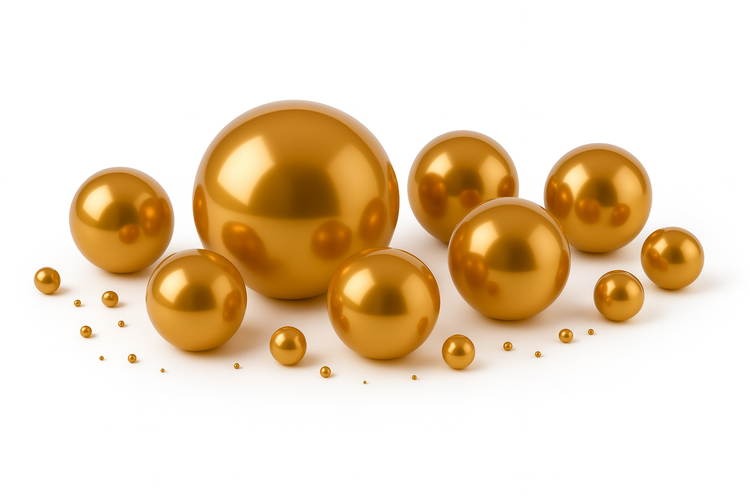
Bronze Balls for Valves, Pumps and Instruments
REDHILL supplies aluminum bronze and phosphor bronze balls for fluid control and mechanical parts. Each material offers a different balance of strength, wear resistance and corrosion resistance. Therefore, choose the alloy to match the fluid, load and temperature.
Aluminum Bronze Balls
Aluminum bronze balls combine strength with resistance to wear and corrosion. As a result, engineers use selected grades in marine valves, pumps and other fluid systems. Iron and nickel additions help adjust the alloy’s strength and corrosion resistance.
- Composition: Copper-aluminum alloys. Nickel aluminum bronze grades commonly contain 8–11% aluminum, plus iron, nickel and other elements.
- Wear Properties: Selected grades resist wear, galling and cavitation damage.
- Magnetic Response: Iron content and heat treatment affect magnetic properties.
However, seawater performance depends on the grade, water chemistry and flow. Therefore, match the alloy to the actual service conditions.
Phosphor Bronze Balls
Phosphor bronze balls use copper-tin alloys with a small phosphorus addition. They combine wear resistance with useful electrical conductivity. In addition, selected grades offer good strength under repeated loads.
- Composition: Copper, tin and phosphorus. The alloy specification defines the exact limits.
- Wear Properties: Suitable grades support valve, bearing and instrument applications.
- Electrical Properties: Conductivity varies with composition and condition.
For example, engineers use phosphor bronze balls in check valves, special bearings and electrical devices. However, fluid compatibility still depends on the grade and working conditions.
Applications of Bronze Balls
- Valves and Pumps: Check balls and sealing elements for flow control and dosing systems.
- Marine and Offshore Equipment: Selected aluminum bronze grades for seawater valves, pumps and instruments.
- Electrical and Measuring Devices: Conductive parts for contacts and precision instruments.
- Mechanical Assemblies: Selected bearing and wear parts.
Material Selection
Hardness, tensile strength, density and conductivity depend on the alloy and condition. Therefore, confirm these values for the finished balls. In addition, match the surface finish and lubricant to the load, motion and mating material.
Available Grades and Sizes
We supply standard metric and inch sizes. We can also review custom diameters, tolerances and finishes. Use our precision grade guide to define your ball tolerances.
Finally, send us your alloy, diameter, ball grade, quantity and working conditions. We can then confirm suitable options, availability and lead time.